Pages

Showing posts with label Mie. Show all posts

Wednesday, March 02, 2016

Tulips at Kiso Sansen Koen

One of the many parks in Japan that we have visited over the years is the Kiso Sansen Park. What makes the park unique is that it straddles three prefectures - Aichi, Gifu and Mie making it Japan's largest National Government Park.The centre of the park and its main access point is in Kaizu city in Gifu prefecture. It is the meeting point of three rivers- Kiso, Nagara and Ibi. 
Of the many flower festivals in the park, the most popular is the Tulip Festival. 
The Tulip area is created in a way that recreates the Tulip fields of Holland. Even miniature windmills are placed amidst the tulip fields. 

About 260,000 tulips of 125 kinds can be seen in the park. 


The colorful tulips create spectacular patterns. 


Miffy, the dutch rabbit character from Dick Bruna's books is a popular character among young children in Japan. During the Tulip festival, Miffy also 'makes' an appearance in the park and people queue up to get a picture clicked with Miffy. 
The Tulip flowering season in April sometimes coincides with the Cherry Blossom festival and it indeed is a treat for the eyes. 
The 360 degree panoramic view from the observation tower offers spectacular views of the colorful tulip beds in the park.


The Kiso Sansen Park is undoubtedly one of Japan's best flower parks and host many festivals from spring through fall. In summer it is also a popular place for picnics. It has a large play area which goes by the name Adventure Land. It features lots of colorful play equipment for kids of all ages. 

There are a couple more parks in the Japan popular for Tulips, the most frequented being the Hitachi Seaside Park in Ibaraki prefecture and the Huis Ten Bosch theme park in Nagasaki Prefecture. 

Address: Gifu Prefecture 503-0625, Kaizu city, Kaizu-cho, Aburajima 255-3

Phone: 0584-54-5531 

Entrance fees: Free ; Observation tower 620 yen

Opening Hours:  Weekdays 9:00-17:00 and Weekends 8:00 - 18:00 

Closed: 2nd Monday of every month and December 27-30th each year

Parking: Ample Free Parking available

Official Website: http://kisosansenkoen.jp/e/kiso_sansen_park_center/ 

Thursday, October 16, 2014

Meoto Iwa : The Wedded Rocks

On our recent visit to Ise Grand Shrine, we also visited Meoto Iwa. 
A 15 minute car ride from the Ise Grand Shrine is the the Futamigaura Beach. The biggest attractions here are the Futami Okitama Jinja and the Meoto Iwa. 

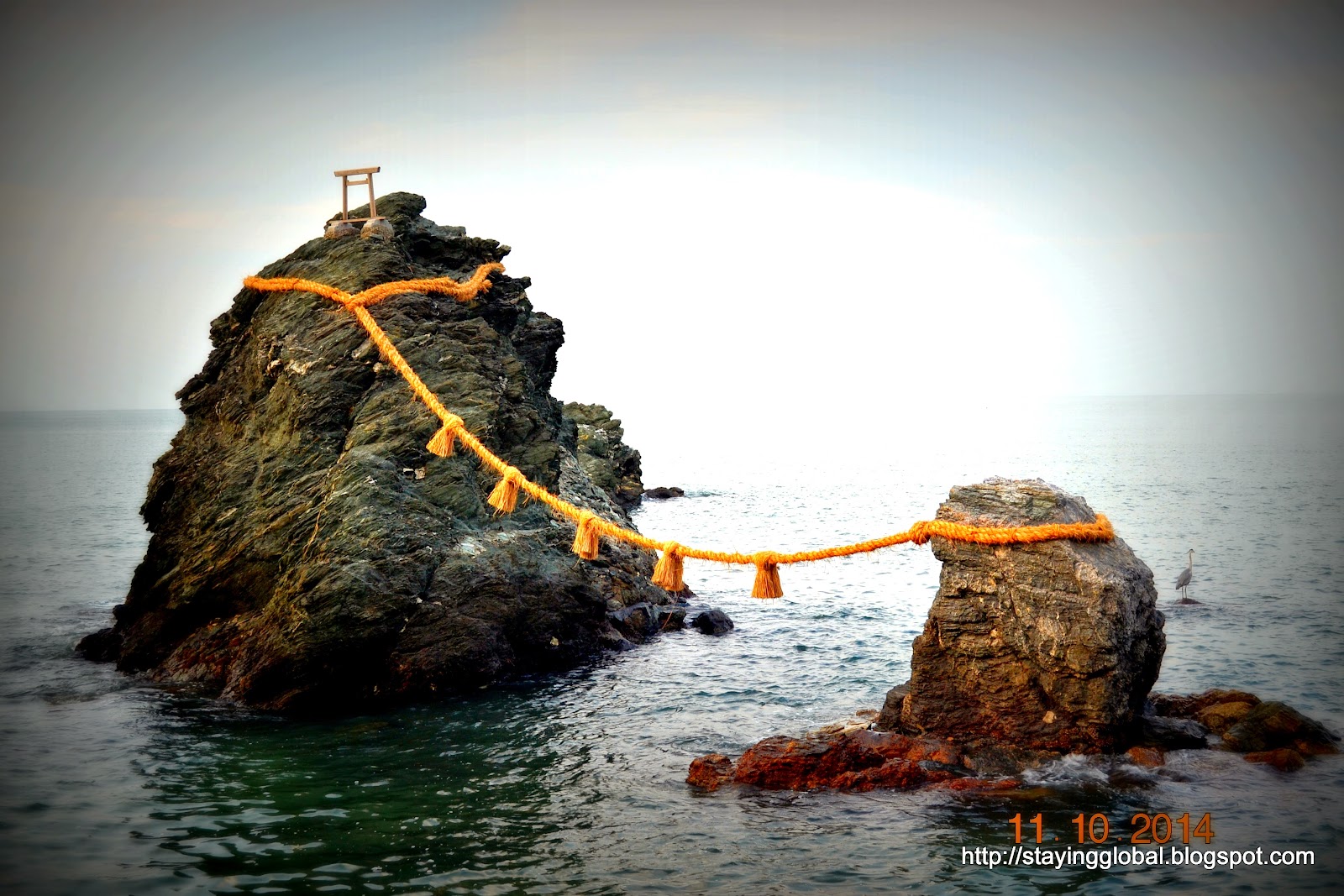
The Meoto Iwa are two rocks considered to represent Izanami and Izanagi , the patron gods of Japan. The larger rock with a small wooden torii at the peak is considered as the male rock while the smaller rock is considered to be the female rock. 
According to Shinto, the rocks celebrate the marital union of man and woman. Together they are referred to as the Wedded Rocks and are said to have special powers particularly to ensure harmony in marriage and ward off evil.  

The offshore rocks have been joined in matrimony by sacred straw ropes called Shimenawa. The ropes weigh over a ton  and are replaced several times a year. Many young couples believe that watching this ceremony with their loved one will strengthen their bond. 

The view of the rocks is said to be spectacular especially at sunrise between May and July. No wonder the spot is a popular place for Hatsu Hinode, the ritual of watching the first sunrise of the new year. Similarly the moon rising between the rocks between October and January is also said to be a spectacular sight. 

In clear weather, even Mount Fuji can be viewed in the distance. We didn't get to see it though, our visit was on a day before the super Typhoon Vong Fong was supposed to arrive in the region !
The Futami Okitama Jinja is built overlooking the Meoto Iwa. 

The shrine is dedicated to Goddess Miketsu, the goddess of food. 
Numerous statues of frogs are scattered around the shrine.


People offer small ropes at the shrine.
The Shrine's Votives also feature the Meoto Iwa.  

Address: Mie Prefecture, Ise, Futami Cho e, 575

Phone: 0596-43-2020

Closing Days: Open 365 days

Parking: Available 

Ise Grand Shrine: Japan's most sacred Shrine

The Grand Shrine at Ise, or Ise Jingu as it is known locally, is the most venerated Shinto Shrine in Japan. Dating back to the 3rd century, this Shrine is a large complex comprising 125 shrines. The Shrine occupies a large area in Ise city, Mie Prefecture in central Japan. The shrine attracts about 8 million visitors annually.  The locals refer to the shrine as "O-Ise san" or "Dai Jingu san".  

The Shrine's main two shrines are the Naiku and Geku. Both shrines are located several kilometers apart. The Naiku is believed to have been established in the 3rd century while Geku is said to have been established in the 5th century. 
Naiku, also called the Kotai-jingu, is the Inner Shrine. The Shrine is dedicated to Shinto's most venerated deity Amaterasu Omikami, the Sun Goddess. Amaterasu is also believed to be the predecessor of the Imperial family. The Deity is also regarded as the nourisher of all life. In Nihon Shoki, the Chronicles of Japan, dating back to 720 AD, it is mentioned that Amaterasu Omikami descended from the heavens and selected Ise as the place for her enshrinement. The Naiku's main sanctuary, is referred to as the divine palace of Amaterasu Omikami. The Holy mirror, a symbol of the deity, is enshrined inside.

Geku, also called the Toyouke Dai-jingu, is dedicated to Toyouke Omikami, the provider of sacred foods and companionship to Amaterasu. The deity is also the guardian of well being and the provider of food, clothing and shelter. People pray to the deity for a good rice crop, the staple food of Japan. The deity is considered the guardian deity for any industry. Traditionally pilgrims pay their respects at the Geku before proceeding to pray at the Naiku.

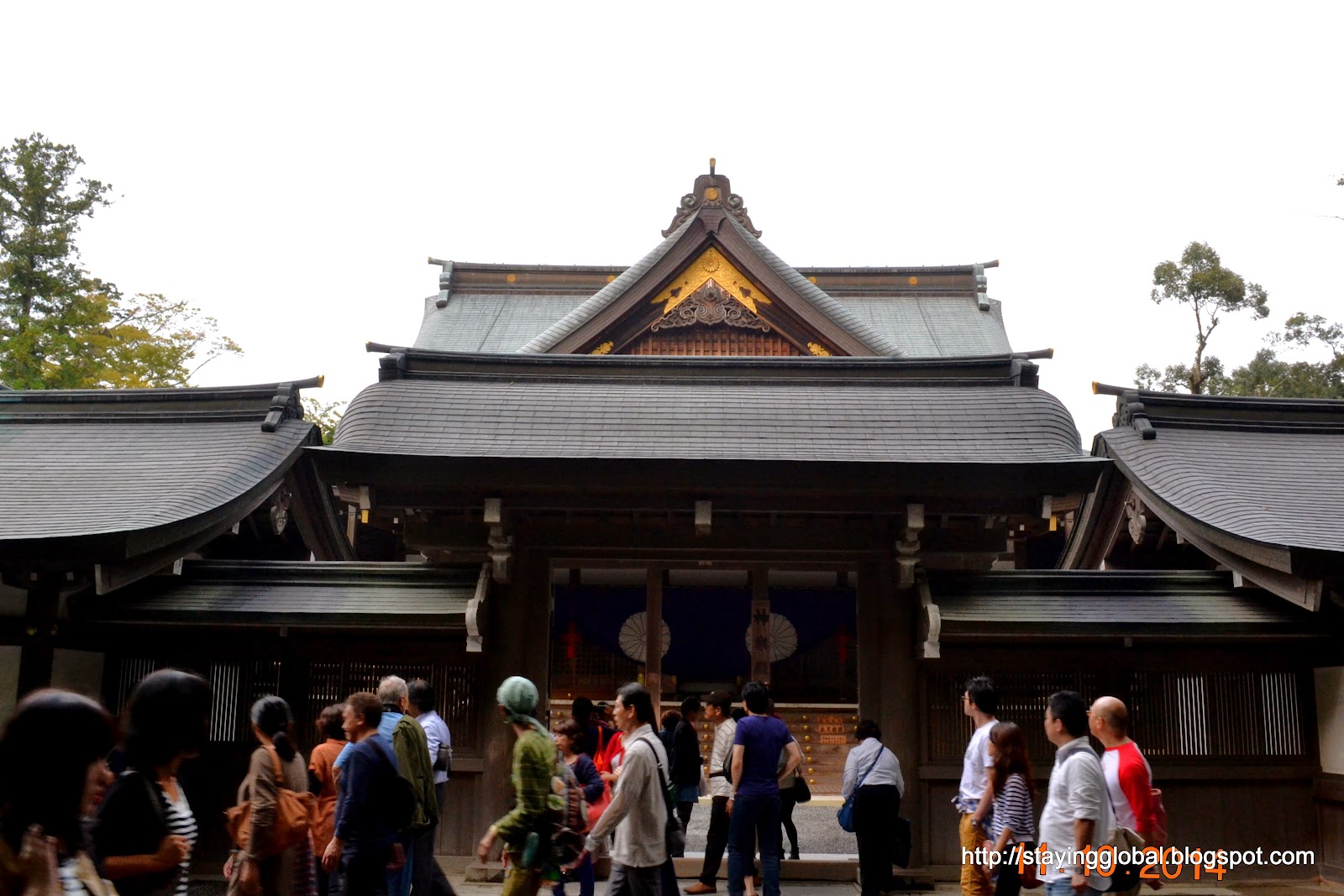
The Shrine buildings are built in simple style. 


They are not ornately decorated or painted like the Shrines at Nikko


They are surrounded by green trees and visitors have to walk past tall trees to reach the shrine structures. 

Photography is not allowed near the main shrine buildings. Most of the innermost buildings are hidden from the view and are off limits to common people.
Only the priests and members of the Imperial Household can enter the main shrine buildings. As per ancient tradition, the chief Priest was a member of the Imperial Household. In the past, emperors have held this position. In recent years the position is held by former members of the Imperial family or their descendants.    

Occasionally visitors are treated to the sight of a wedding procession in the shrine complex. 


An unique tradition of the Ise Grand shrine is the Shikinen Sengu, a ceremony held every 20 years. As per an ancient tradition, some of the Shrine buildings, including the Geku and Naiku are required to be rebuilt every 20 years. The tradition is said to have been started about 1300 years ago on the orders of the Emperor Tenmu. The shrine buildings are reconstructed on adjacent sites according to ancient construction styles. The Uji Bridge at the entrance to the Naiku is also reconstructed. Ceremonies and preparations for the rebuilding commence few years earlier. The ceremonies for the 2013 Shikinen Sengu commenced as early as 2005.  Upon completion of the new buildings, the god of the shrine is ritually transferred to the new home in a ceremony called Sengo No Gi. The old shrine building is then deconstructed and the wood from the old shrines are sent to other Shinto Shrines around Japan for use in rebuilding their structures.
The Torii at the Shrine's entrance is also reconstructed using wood from the old shrines. The site of the old shrine , now called as Kodenchi, is left vacant and is covered with white pebbles. At the time of the next reconstruction, the Kodenchi becomes the site for the new shrine. The 62nd Regular Removal of the Grand Shrine of Ise (the formal translation of Shikinen Sengu) was held in October 2013 and the next will be held in the year 2033. The Shikinen Sengu is considered the largest and most important ceremony performed in Japan. 

Visitors have been coming to Ise Jingu since ancient times. 
The manhole cover in Ise features pilgrims to the Shrine, apparently from the Edo period. 


Address:  
Naiku : Mie Prefecture 516-0023, Ise shi, Ujitachi-cho 1

Geku : Mie Prefecture , Ise shi, Toyokawa-cho 279 

Phone: 0596-24-1111

Parking: Paid parking available. 

Timing: 5:00-18:00 hrs ( Timings vary as per season)

Visitors can also visit Meoto-Iwa, the wedded rocks as a side trip when visiting the Ise Grand Shrine.