Pages

Sunday, December 11, 2011

Tokyo Motor Show 2011

Visited the Tokyo Motor Show this weekend with my family.

The Tokyo Motor Show is a biennial event held in Tokyo. This year's event was held from 3rd to 11th December 2011.The venue of this year's event was Tokyo Big Sight in Odaiba.

This show is hosted by the JAMA (short for Japan Automobile Manufacturers Association) and is considered as one of the five major motor shows in the world. The show is popular for the number of concept cars that are showcased at the event. 

Some images from the 42nd Tokyo Motor Show, 2011:  


And finally one for the kids : 


Kozukai - When Men earn an Allowance


There is an interesting custom in Japan. Salaried men bring home their salary and hand it over to their wives. She then hands him over a fixed sum of money as his allowance for the month. This allowance is known as “Kozukai”. A survey in 2010 ( by Shinsei Financial Co Ltd) quotes the average monthly allowance amount to Yen 40,600. In some cases the men retain a fixed percentage of salary as allowance and handover the rest to their wives.

This allowance is for men to meet their personal expenses during the month while the wife takes care of the living expenses. The man uses his allowance for meeting his expenses of eating out with co workers and friends, drinking, smoking and lunch. All other expenses for the family are taken care of by the wife, who manages the family’s finances. If the woman manages to save any amount after meeting the expenses, it is an allowance for her. This allowance is called “hesokuri” and was generally kept aside for emergency needs.

When I first heard about this custom, I thought it was a custom in few households. I even joked about how I envied the Japanese women. The custom reminds me of the pocket money or allowance that parents gave us when we were kids. 

Recently I picked up an old copy of “Hiragana times” from the library which carried an article about this custom. It said that due to the current economic situation in Japan, the allowance for men had decreased in the recent years. The article also said that because of the decrease in allowance, more men have started carrying lunch boxes to work or eating in the company cafetarias.

While this might have changed in households where both partners are working, the system continues in households with single earning member. 

Saturday, December 10, 2011

Autumn in Japan - 2011


My favourite season in Japan is Autumn. Though I had written about Autumn a while ago, I could not resist writing yet another post this year about this beautiful season.

Autumn is one of the best seasons in Japan. Nature’s best colours are on display. The weather is pleasant.Just not the season to sit indoors on a weekend and miss seeing the beauty of nature. This is usually the time that we like to go exploring the places that one doesn’t find on any tourist maps. Sometimes we end up finding some beautiful places just by chance.

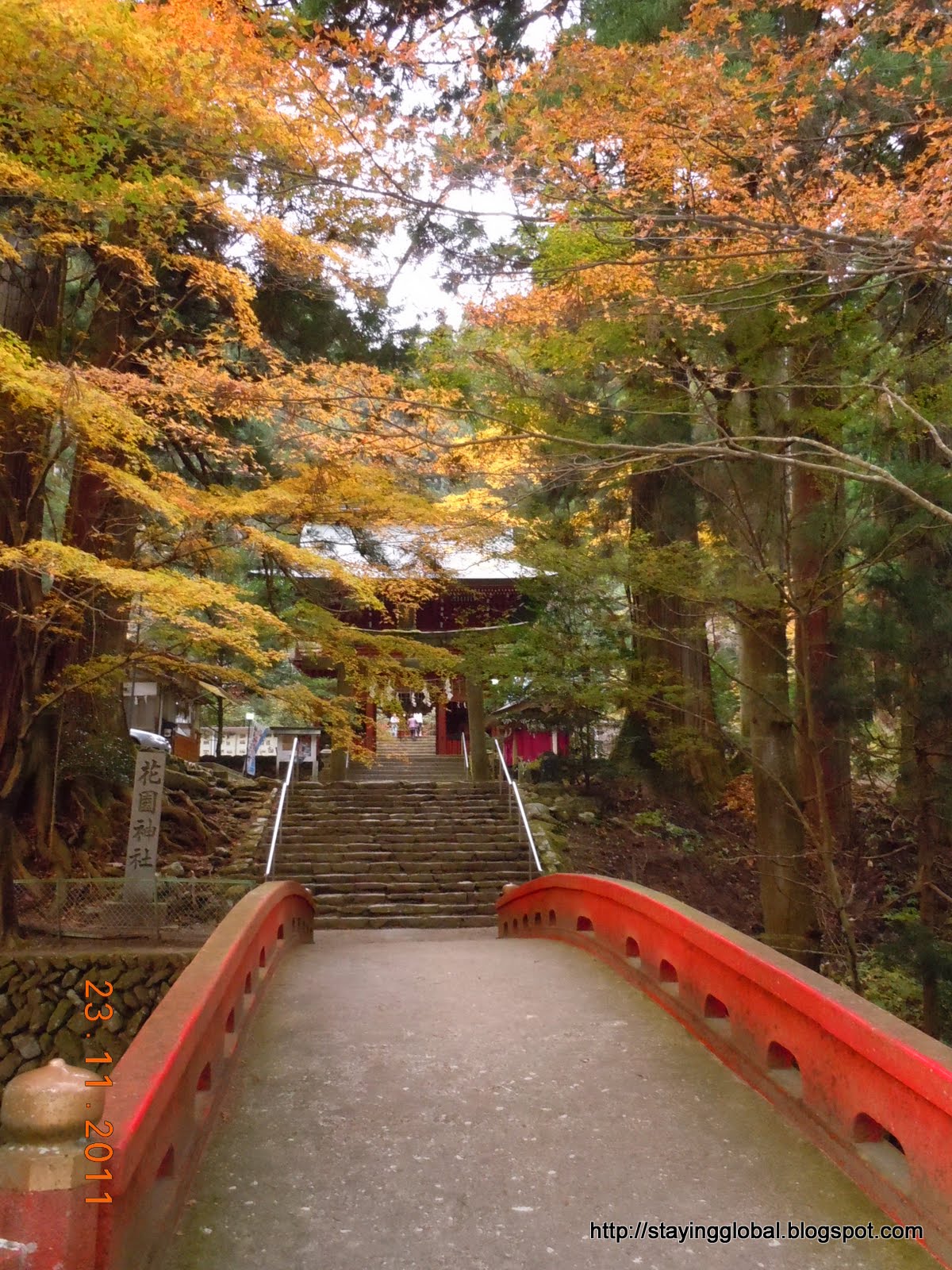
On a recent public holiday, we decided to visit Kita-ibaraki in the neighbouring Ibaraki prefecture. We wanted to see the famed hexagonal building “Rokkakudo” located on a cliff overlooking the Azura coast. When we reached the place, we were surprised to see the entrance closed. The March 11th earthquake had caused substantial damage to the structure and as such the building had to be pulled down. We looked in the Ibaraki guide map hoping to find some other place to visit. We came across a place called Hanozono Gorge which we had not been to before.

Hanozono Gorge is a short drive from Kitaibaraki city. On the way we passed by the Mizunuma Dam.

The drive was spectacular because of all the autumn colours we saw along the way. When we reached the Hanozono shrine at the end of the road, it was a sight to behold.


Iwaki city's Shiramizu Amidado temple has a beautiful garden which is at its best in autumn. 


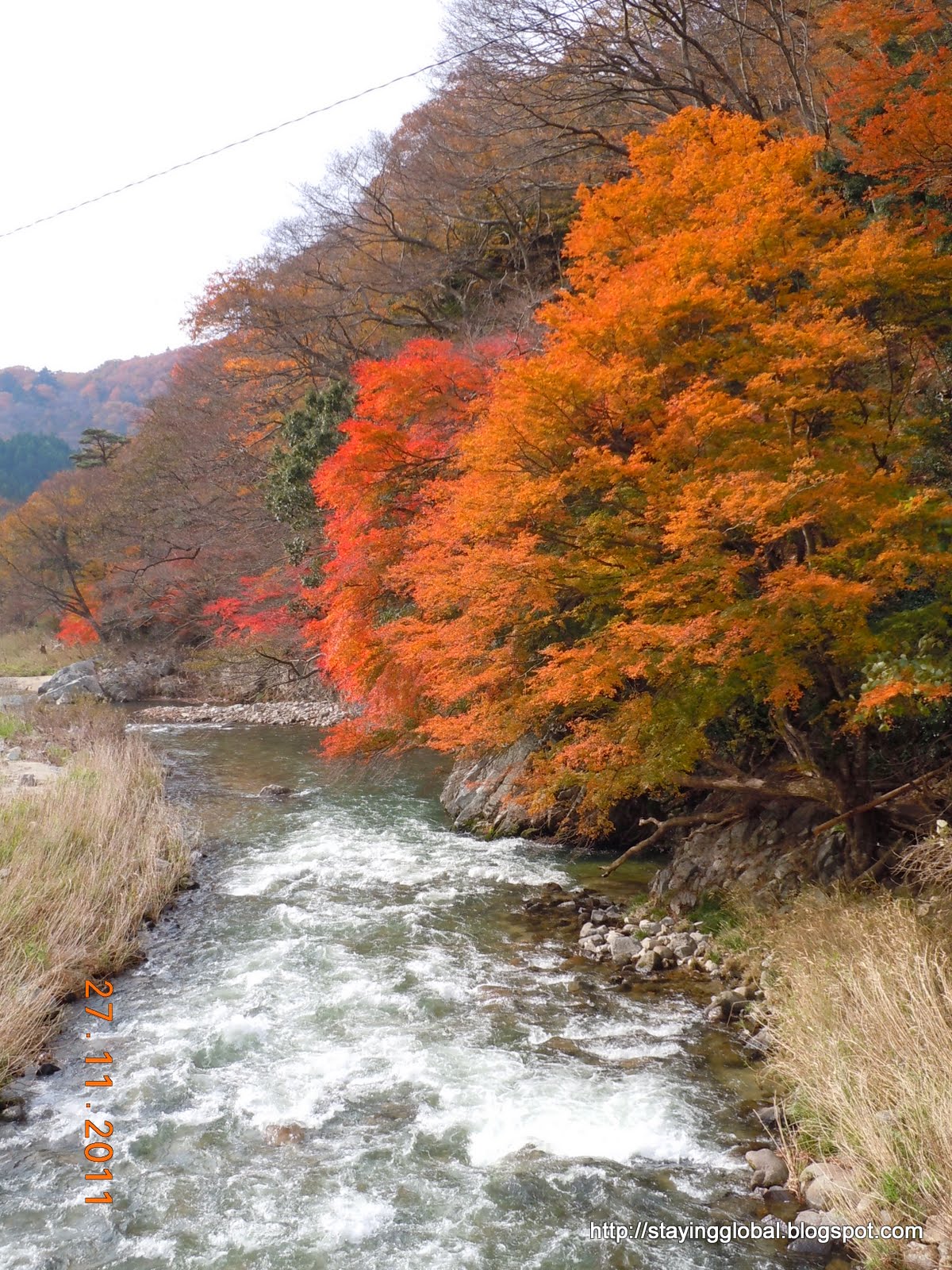
On one weekend, we visited the Natsuigawa gorge on the outskirts of Iwaki city. 

The road along Natsuigawa river is a pleasant drive in any season. 

In autumn the colourful trees add a sparkle to the drive. The Kagoba no Taki waterfall is a must stop. 


The rocky backdrop adds to the beauty of the place. Driving further we found that Setogaro Gorge, a lovely place to visit in any season, was closed, apparently after the earthquake. We had been to Setogaro last year in summer and it is good spot for small hikes along the stream.


There are many such offbeat places all over Japan. Go ahead and explore.

Friday, December 09, 2011

Shirakawa


Shirakawa city is located in southern part of the Nakadori region of Fukushima prefecture. It is about 188 kms from Tokyo and is close to the Nasu highland area. Its location gives the city a cool climate and beautiful nature. The city has been an important part of the history, having been the site of one of the biggest battles during the Boshin War of 1868.

Along with Nakoso near Iwaki city and Nesu, Shirakawa once served as an entrance to the Tohoku region. As such  Shirakawa , once served as one of Tohoku’s important checkpoints.Around 5th century, a barrier was built to protect potential attacks. Today the place remains as a reminder of the past and is a popular place among visitors. 


It is now known as Shirakawa Sekinomori Park. This was the first place that we visited in Shirakawa city.

The park consists of a big open ground, trees and trails, a playground and some “Visual houses”. 


A long slide is the attraction of the play area, tempting even some adults to try it. 

Small food joints serving freshly made soba are popular among visitors to the Sekinomori park.


We then drove to the Nanko park which is about 9 kms from the Sekinomori Park. This park is considered to be the oldest Japanese style park. It was built by Sadanobu Matsudaira, a lord , gardener and tea master. 

The park covers a wide expanse lined by cherry, maple and pine trees. 


A walking path along the Oike lake offers a good view. 

The sunlight around dusk provided a golden hue to the lake, making it picturesque.

 It is said that Nanko park’s look is transformed with every season. The Nanko Shrine stands in one corner of the Nanko park.

 This shrine was built in 1922 and enshrines Sadanobu Matsudaira, the person who built the Nanko pak. 

The Suirakuen garden is located closeby. This is a Japanese style garden and houses a Japanese style tea house called “Shusui-an”.

When we visited Nanko park, it was the peak of autumn and the autumn foliage was at it best.

We then drove to the Komine castle which is a short drive from Nanko park. The castle once served as an important part of history and is said to have been a home to seven clans. It dates back to 1340 when it was first built. It was rebuilt in Teikaku style in 1632. It was destroyed in 1868 during the Boshin war, only to be rebuilt in 1991.

 The castle has been a symbol of Shirakawa city ever since. In the March 11th Great Eastern Japan Earthquake, the castle was destroyed again. When we visited, the restoration work was in progress and as such we could not enter the castle. The restoration work is expected to be completed by mid December 2011 when the castle will be opened to public again. We visited the Shirakawa Shuko-en gallery which stands on the castle grounds. 

Various exhibits are on display here.

Shirakawa city is famous for many things. Apart from the part it has played in history, it has been a big contributor to Japanese culture and cuisine. The Daruma dolls of Shirakawa are famous for their unique style. The Shirakawa Daruma dolls are made without eyes. When wishes are fulfilled, people draw the eyes.

Soba, buckwheat noodles are a popular type of noodles in Japan. This noodle is consumed especially during the winter as it is believed to help endure the cold weather. Shirakawa is one of the four major Soba cities in Japan, the others being Morioka, Izumo and Shinshu. 

Each soba shop has its unique style and way of making soba. The Shirakawa Ramen is also popular for the crunchy handmade noodles which are used in the dish. 

Hundreds of noodle shops in Shirakawa vouch for the city’s unique Soba and Ramen culture. Nanko Dango, a local style of dumpling is a famous confectionary from Shirakawa. 

Fukushima airport is about a 30 min drive from the city.

Access:

Shirakawa Sekinomori Park:
Phone: 0248-22-1147
Entrance : Free

Nanko Park (Suirakuen): 0248-23-6888
Entrance to Nanko Park: Free
Entrance to Suirakuen Garden: Adult 310 yen and Students: 150 yen.
Timings: 9:00-17:00 . Closed on 2nd Wednesday of each month.

Shirakawa Komine Castle:
Phone: 0248-24-5050

Shuko-en gallery.
Entrance: Adults 310 yen, Children 100 yen.
Timings: 9:00-16:30. Closed on Mondays.