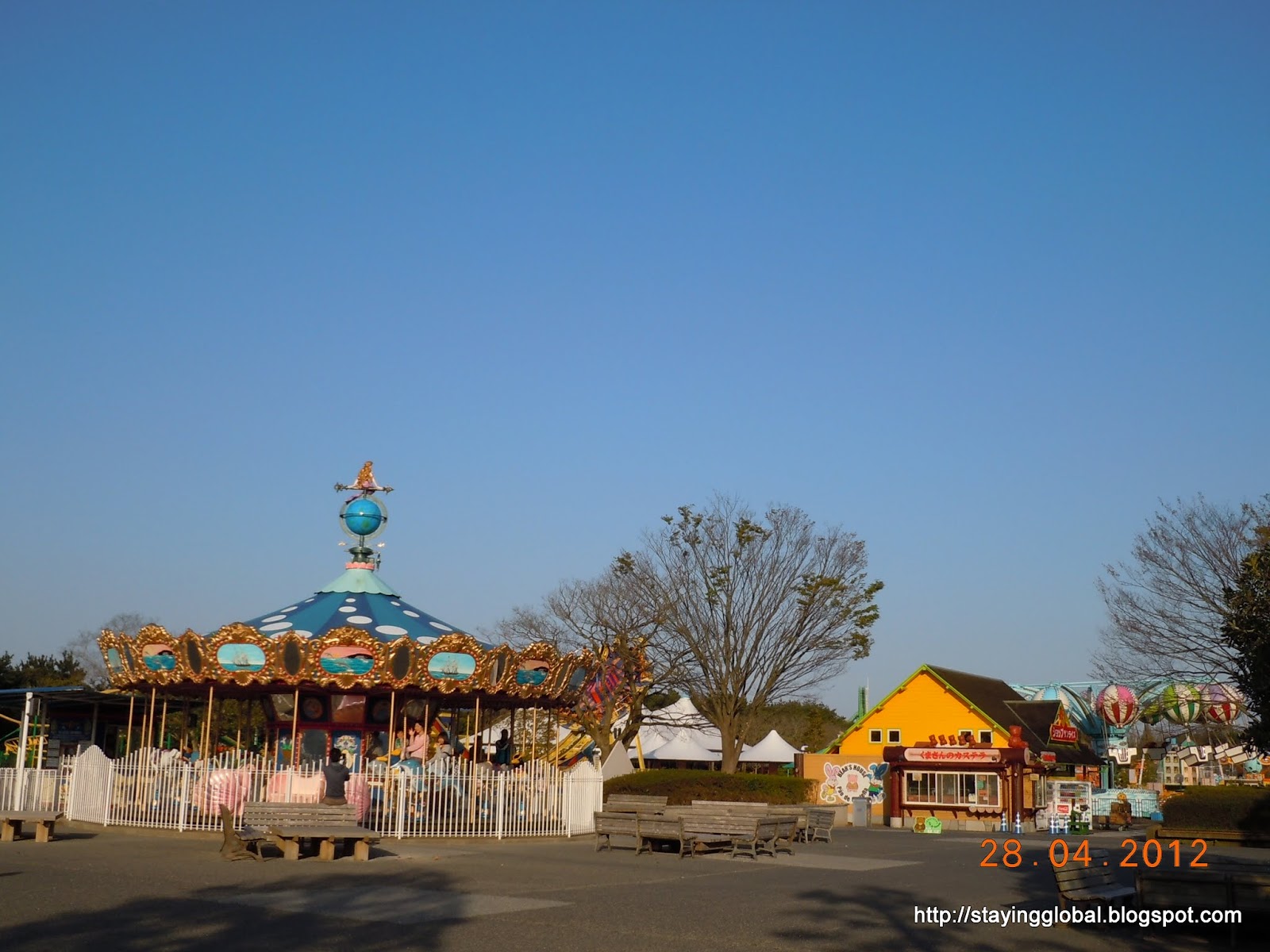
During the Golden week holidays this year, we visited
the Naruko onsen area in Miyagi prefecture.
 Naruko is a popular onsen area in Miyagi prefecture in Japan .Our main reason for visiting Naruko area was to view
the geysers in Onikobe. Onikobe is a little distance away from Naruko town. We
drove past Naruko dam, Lake Arao and
picturesque snow covered mountains to reach Onikobe.
Naruko is a popular onsen area in Miyagi prefecture in Japan .Our main reason for visiting Naruko area was to view
the geysers in Onikobe. Onikobe is a little distance away from Naruko town. We
drove past Naruko dam, Lake Arao and
picturesque snow covered mountains to reach Onikobe.


 We passed by an
interesting “Oni” bridge on our way.
We passed by an
interesting “Oni” bridge on our way.
 “Oni” is the Japanese word for “demon” or
“ogre” and the Onikobe area has a folklore associated with an ogre !
“Oni” is the Japanese word for “demon” or
“ogre” and the Onikobe area has a folklore associated with an ogre !
 The highlight of Onikobe is the Onikobe Geyser which
is also known as “Benten” geyser.
The highlight of Onikobe is the Onikobe Geyser which
is also known as “Benten” geyser.
 Hot water sprays up like a fountain as high as twenty meters high
at times, every 10 minutes. Visitors
eagerly await this spectacle.
Hot water sprays up like a fountain as high as twenty meters high
at times, every 10 minutes. Visitors
eagerly await this spectacle.
Water temperature ranges between 100 deg C - 120 deg C.
 A small “rotenburo”, open air bath is located
closeby.
A small “rotenburo”, open air bath is located
closeby.

 It was closed during our visit but we got to have a look. An “Ashi-yu”
(foot-bath) close by has boiling hot water, a boon for tired feet.An “Omiyage” (souvenir) store sells food and other
souvenirs. Visitors can also purchase eggs which they can then boil in the
small covered hot spring pit closeby.
It was closed during our visit but we got to have a look. An “Ashi-yu”
(foot-bath) close by has boiling hot water, a boon for tired feet.An “Omiyage” (souvenir) store sells food and other
souvenirs. Visitors can also purchase eggs which they can then boil in the
small covered hot spring pit closeby.
 A 1.2 km long walking trail leads past many hot
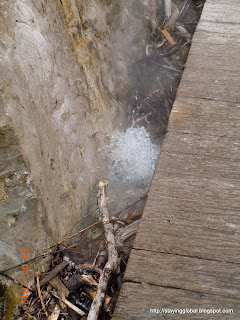
geysers. Boiling water flows from beneath rocks and small outlets. A few
geysers blow out hot water fountains every few minutes.
A 1.2 km long walking trail leads past many hot
geysers. Boiling water flows from beneath rocks and small outlets. A few
geysers blow out hot water fountains every few minutes.



 At the end of the trail is a waterfall.
 Opening days: 365 days
 We visited Waseda Onsen in Naruko. This Bath House was is named
after a group of students from Tokyo’s Waseda University who visited Naruko
after the World War II to learn about well drilling and successfully discovered
a hot spring. This bath house is popular among visitors.
We visited Waseda Onsen in Naruko. This Bath House was is named
after a group of students from Tokyo’s Waseda University who visited Naruko
after the World War II to learn about well drilling and successfully discovered
a hot spring. This bath house is popular among visitors.
Our visit in late April coincided with the Cherry Blossom season and Naruko to had it's share of Sakura blooming.


Entrance fees: 400 yen ( Adults)
Address: Aza
Fukiage, Onikobe , Naruko Onsen, Osaki- shi, 989-6941, Miyagi Prefecture
Phone: 0229-86-2233
Closed: Winter ( December to March)
Parking: Free parking available (20 cars)
Located a few hundred metres from the Onikobe geyser
is “Jigokudani”. “Jigokudani” translates as “hell valley”, appropriate for a
place that resembles a volcanic hell. Jigokudani is also referred to as
“Katayama Jigoku” of “Fukiage Jigoku” valley.


Visitors bring eggs to boil them in the flowing hot water.
 One particular geyser
made a strong sound of boiling water and we waited patiently for about 25
minutes before the geyser obliged us with a spectacular show. It was worth the wait.
One particular geyser
made a strong sound of boiling water and we waited patiently for about 25
minutes before the geyser obliged us with a spectacular show. It was worth the wait.


Opening hours: Round the clock
Entrance fees: Free
Parking: Free parking available.
Access: Follow the signboard on the left side of the
road (while driving up from Naruko town) just before the road leading to
Onikobe geyser.
After visiting Onikobe and Jigokudani, we drove back
to Naruko.The Naruko Onsen area comprises of five hot springs scattered Naruko town- Naruko, Higashi Naruko, Onikobe, Kawatabi and Nakayamadaira. The speciality of the onsens in this area is the presence of sodium chloride and sodium bicarbonate in the hot spring water. The water is used for therapeutic diseases and as such the onsen area is visited by people with chronic ailments. Needless to say the entire area is full of bath houses.

(Admission Yen 500 per adult and Yen 300 per child.
Additional 1000 yen for using the Family Bath. Towels available for sale. Phone: 0229-83-4751. Opening Hours: 9:00-22:00
hrs)
Naruko area is also popular as one of the largest manufacturers of the Kokeshi dolls. Kokeshi dolls are said to have originated in the Tohoku region and Naruko is one of the towns which claims to have been one of it's original makers.
 No wonder the Kokeshi doll can be seen everywhere even along the roads.
 Our last stop in Naruko area was the Katanuma swamp.
 This caldera lake was formed during a volcanic eruption and the high acidic
content gives the lake’s water a turquoise blue colour.
This caldera lake was formed during a volcanic eruption and the high acidic
content gives the lake’s water a turquoise blue colour.
 In fact, Katanuma has
the reputation of being the lake with the highest acidity levels in Japan. Katanuma reminded us of the Bishamon pond on the Goshikinuma trail in Bandai.
In fact, Katanuma has
the reputation of being the lake with the highest acidity levels in Japan. Katanuma reminded us of the Bishamon pond on the Goshikinuma trail in Bandai.
Naruko area is also popular as one of the largest manufacturers of the Kokeshi dolls. Kokeshi dolls are said to have originated in the Tohoku region and Naruko is one of the towns which claims to have been one of it's original makers.


Our visit in late April coincided with the Cherry Blossom season and Naruko to had it's share of Sakura blooming.


We drove to the Shiraito falls near Naruko on our way
back, but we found it average after having visited many other spectacular
waterfalls in Japan.
 Naruko Kyo ( Gorge) is a popular destination among visitors especially in October-November when the autumn foliage is at its best. Abundant snow in winter makes Naruko a popular skiing
area. However the Onikobe geyser and Jigokudani are closed
during the winter.
Naruko Kyo ( Gorge) is a popular destination among visitors especially in October-November when the autumn foliage is at its best. Abundant snow in winter makes Naruko a popular skiing
area. However the Onikobe geyser and Jigokudani are closed
during the winter.