Pages

Wednesday, March 12, 2014

Inuyama: Inuyama Castle and Shirotomachi

Inuyama is a city in Aichi Prefecture, less than an hour's drive from Nagoya. It's name literally means "Dog Mountain". The city is has many attractions to lure tourists or even locals looking for a leisurely outing. Inuyama is located along the picturesque Kiso river, also referred to as Japanese Rhine, which separates the city from the neighbouring Gifu prefecture. In summer, Cormorant fishing is conducted in the evenings in the Kiso river in Inuyama attracting many visitors.The city is also home to Meiji Mura, a popular open air theme park built around the theme of the Meiji Period. It is also home to the Japan Monkey Park, an amusement park cum Monkey park. But the most important of the city's attractions is its castle, the Inuyama-jo. 
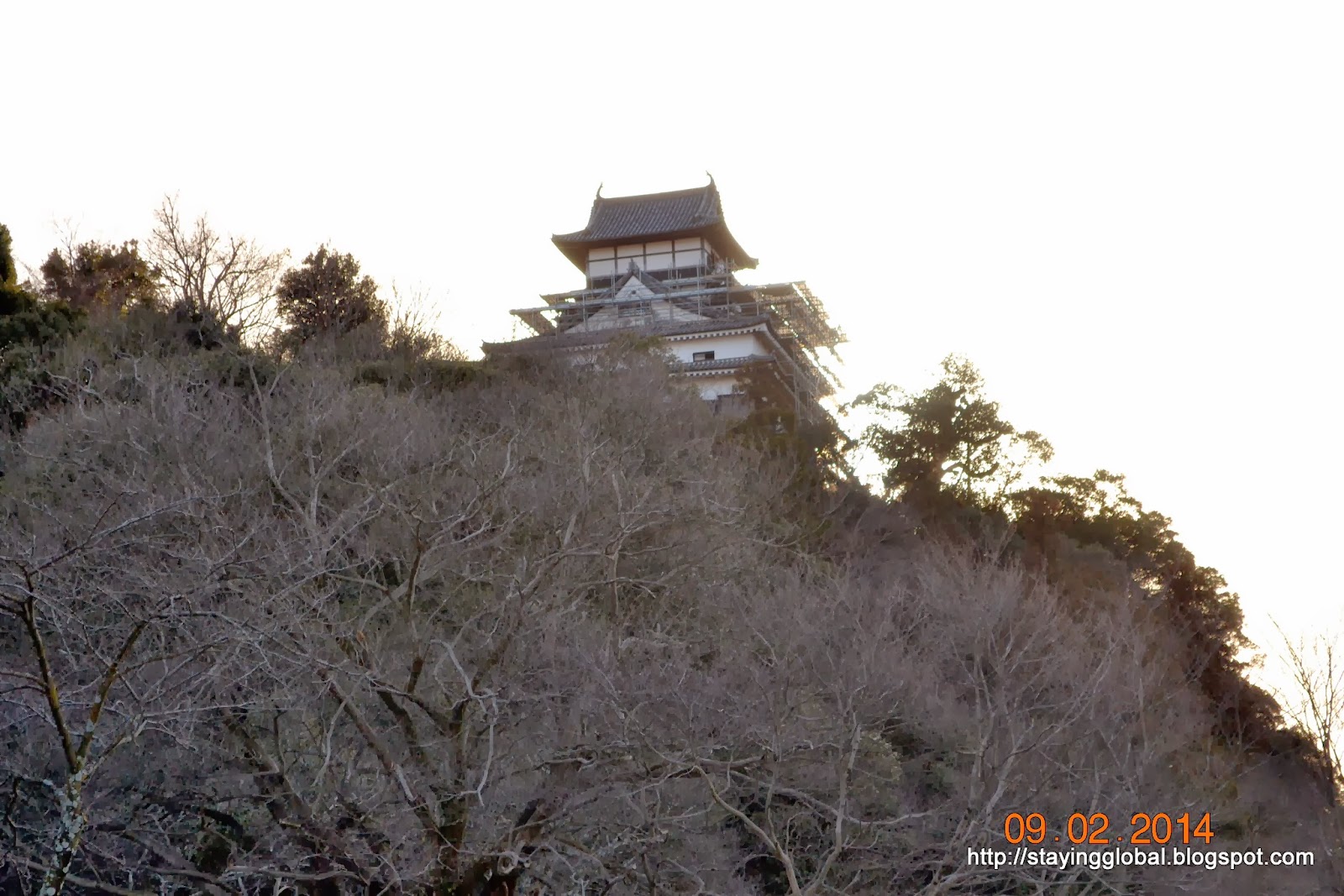
Inuyama-jo is a small but well preserved castle located on a hill overlooking the city. It is one of the few wooden castles in Japan surviving in its original state. The castle has also survived various wars and natural disasters. The castle has been designated a national treasure. 
The castle was built in 1537 by Oda Nobuyasu, the uncle of popular warlord Oda Nobunaga. The castle was built on the site of the old Harigane Jinja, which was relocated to Shirayamdaira to make way for the castle. The castle moved between various families, till it was taken over by Naruse family  who owned it since 1616 till it was taken over by the Meiji government who held it till 1895 when it was handed back to the Naruse family. The castle was one of the last remaining privately owned castles till it was handed over to a state owned trust.
The castle is built entirely of wood and rocks and its interiors have been preserved well to retain its original look.

Visitors can scale the castle's steep wooden stairs to explore the four stories. 
Few old artifacts and armors are also on display within the castle.
A miniature model of the castle is also on display.
Visitors can look out of the windows to see picturesque views. 

The top most level offers panoramic views of the city, the Kiso river and also Nagoya in the distance.    


At the foot of the path leading up to the castle are the Haritsuna Jinja and the Sanko Inari Jinja.


Tickets to the Inuyama castle also include entrance to the Shirotomachi Museum and the Karakuri Puppet Museum. 
The Shirotomachi Museum is where various artifacts related to the city's history and culture are on display.
The museum also has on display a miniature model of the city, in its old days, with the castle on the hilltop and the mechanical floats passing through the old town.

 Small models of the various kinds of mechanical floats are also on display. 


The Karakuri Puppet museum across the street, has on display about 10 Karakuri Mechanical dolls which perform atop the mechanical floats in the annual Inuyama Matsuri in April.


Few cultural artifacts are also on display in the exhibit room.Outside the museum, objects associated with cormorant fishing such as a boat, stuffed cormorant bird etc are on display.
On certain days, visitors can also see the master puppet maker demonstrate Karakuri doll making. 

When we visited Inuyama castle and the museums in February, two Hina Matsuri Doll exhibits were on display at the Inuyama city Welfare centre down the street. 


Visitors can enjoy a leisurely stroll on the street.


Address: Aichi Prefecture, 484-0082, Inuyama city, Kitakoken - 65-2, Inuyama castle

Phone: 0568-61-1711

Opening time: 9:00 to 16:30

Closing days : December 29- January 1

Admission : Adults :500 yen; Children 100 yen
                   Includes entrance to Karakuri Puppet museum and Shirotomachi Museum.

Parking : Paid Parking available
Tuesday, March 11, 2014

Nabana no Sato : Winter Illumination 2014

Nagashima Island near Kuwana city in Mie Prefecture is home to a variety of attractions, all forming part of a widespread resort, the Nagashima Resort. Its proximity to the cities of Nagoya, Toyota, Yokkaichi and Kuwana make it a popular vacation destination. It has many attractions to cater to various age groups.

The Nagashima Resort comprises of 4 main facilities - The Nagashima Spa Land, an amusement park which also includes a Water Park, A hot spring/ onsen complex, an outlet shopping mall and a flower park named Nabana no Sato. The popular Nagoya Anpanman Museum is also part of Nagashima resort.

Of all the facilities, Nabana no Sato, the flower park is located a 15 minute ride away. The park is famous for its seasonal flowers throughout the year, and also hosts a flower festival in spring. This flower festival is also reputed to be one of the largest such festivals in Japan. From spring to summer, the park is home to a variety of flowers- Hydrangea, Tulips, Roses and Daffodils.


But the park perhaps attracts maximum visitors in the winter, when the park hosts a Winter Illumination event. The Winter illuminations are held from November to end of March.The illumination is one of the largest illumination events in Japan and as such attracts large crowds from all over the country.
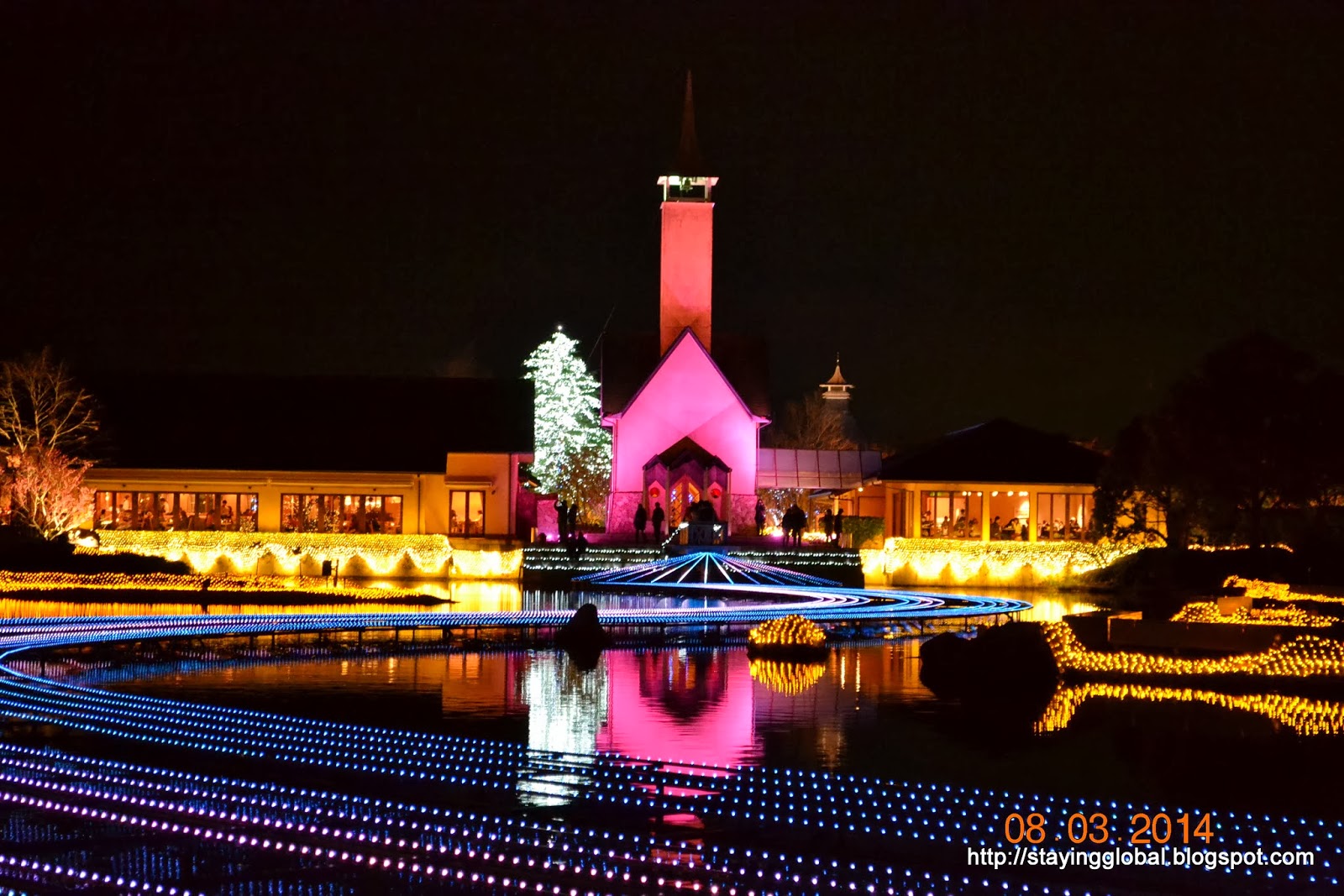
 The natural beauty of the park transforms into a magical world when the lights are turned on around dusk. 


The main attraction of the Winter Illumination 2014 event is the Mt Fuji. 
This theme coincides with Mt Fuji's inclusion in the list of UNESCO World Heritage sites in 2013.


The Mt Fuji light up display reflects colors of the 4 seasons and the passage of time from daybreak to night.  
  
The lights change colors at frequent intervals giving a magical feeling.


The lake near the chapel in the centre of the park is also lit up. 


Visitors pass through a "Tunnel of light" on their way to the Mt Fuji display.


On the return route visitors pass through another tunnel, Momiji tunnel which is lit up in red lights.


The park also features Island Fuji, a moving observation deck which offers good views of the park. 


The park also has a walk through Plum orchard, which was in full bloom during our visit. 


Walkways lined on both sides with Plum trees make this area a pleasure to visit.


The Weeping Plum trees with their white and pink blossoms are a pretty sight. 

A few Cherry trees were also beginning to blossom.
A giant green house, known as Begonia garden has a large display of potted Begonia plants throughout the year. Entrance is charged separately for the Begonia Garden.

The park also has many restaurants, beer garden, gift shops and even an onsen to cater to visitors. Visitors can also soak up their tired feet in an " Ashi yu", a foot bath. 

During the winter illumination, Nabana no Sato can be fairly crowded during the weekends. It would be a good idea to visit the park in the afternoon or early evening and then wait till the lights are up. We did the same so that we could enjoy both the floral beauty by the daylight and the illumination by night. 

Tickets are priced at 2000 yen for elementary school children and above during the winter illumination. The tickets also include vouchers for 1000 yen which can be used at the gift shops and food joints in the park. Entrance to Begonia Garden, Onsen and the Island Fuji are charged separately.

Address:  Mie Prefecture, 511-1144 , Kuwana city, Nagashima cho, Komae Urushibata 270

Phone: 0594-41-0787

Opening hours : 9:00 am to 9:00 pm 

Tickets :
During Winter Illumination :2000 yen (Elementary school students and above); includes vouchers for 1000 yen
Rest of the year : 1500 yen 

Parking: Ample Parking available

On certain days a shuttle bus operates between the parking area of the Nagashima Spaland area and Nabana no Sato. Check in advance. 

Website: http://www.nagashima-onsen.co.jp/nabana/illumination/index.html/ 

Monday, March 10, 2014

Randoseru - The ultimate school bag

It is that time of the year when stores in Japan start displaying stuff that students need for a new school year. The school year begins in April but the school supplies go on sale just after New Year. 

Of the many things that need to be prepared before the school year begins, the RANDOSERU is the most important. What exactly is a Randoseru ?

Randoseru is a backpack which is used by the Elementary School students in Japan. It differs in many aspects when compared to the backpacks used by school students in other parts of the world. When we had just moved to Japan, I often wondered why most Elementary school students carried the same kind of bag ? Was it one more of the standard things that Japanese people did? Then I found out that this school backpack was initially launched in the Meiji period as a backpack for commissioned officers. After the war, the back was introduced in Government schools as a commuting bag and it has over the decades become the staple Elementary school backpack.  

The name Randoseru is derived from the Dutch word "Ransel" meaning a backpack.
Traditionally made of pure firm leather, about 70 % of the Randoseru these days are made of a synthetic material called Clarino that looks like leather.  
The Randoseru comes in a variety of colours - Pink, Red, Brown, Green, Blue, Navy Blue, Black , Purple and even in dual tones. Randoseru even come in cute versions with glittering stones and motifs for girls. There are Randoseru associated with popular anime characters and usually young children consider it 'cool' to own a particular style of Randoseru. Usually kids receive a shiny new Randoseru around the time they graduate from their kindergarten and prepare to enter Elementary school. Traditionally it is a gift to the child from the grandparents. 

In some conservative schools, the design and color are specified and students are forbidden from using Randoseru that do not meet the specified criteria. Typically girls use a red Randoseru while boys use Black. With parents these days being equally excited about the variety of Randoseru available, students do get to choose the more stylish versions.

A lot goes into the production of a Randoseru. A typical Randoseru usually has the following dimensions: 23 cm wide x 30 cm high and 18 cm deep. Manufacturing a Randoseru is not simple ! A lot goes into making this ultimate backpack.  It is usually handcrafted and usually has a single piece body which comprises 200 odd fittings which hold together die cut materials and urethane backing plates. The intricacies of the Randoseru are a combination of sturdiness and comfort. 
An empty Randoseru typically weighs between 1 -1.25 kgs and is large enough to hold A4 size files and books. The ultra light versions of the Randoseru weigh no more than 800 gms but then they cost a lot more too.  

But why does it have to be so complicated to make the Randoseru ? The answer is simple, the Randoseru is designed so that it lasts through the entire 6 years of a child's elementary school life. And it is meant to endure all the seasons too.A friend told me that most children hold on to their Randoseru beyond their Elementary school life as a souvenir of their carefree childhood. 

But what surprised me the most about the Randoseru is its cost. Most foreigners find its price exorbitant. While the price tag starts at about 7,000 yen, the prices do go up to 60,000 yen. This is the price at normal stores or on Online stores.  At high end departmental stores, the prices could be anywhere between USD 700-1000 depending on the brand and quality. An average family would settle down for a 30000 yen Randoseru. But then again, Japan is a country where Quality of a product is judged by the price tag- Higher the price, better the quality. 
These days, many schools and communities have been following traffic safety guidelines and have started distributing yellow plastic covers to drape over the Randoseru's top flap and is intended to increase the Randoseru's visibility to motorists. Since most Elementary school kids walk to and from school in groups, usually accompanied by just one adult from the neighborhood, this is important for their safety. 
Many students also attach safety reflectors, personal alarms, coin purses, mobile phone cases and small soft toys and key chains to their Randoseru. Some kids also use clear plastic covers that can be slipped over the bags to protect it from rain and snow.

These days the Randoseru is also gaining popularity outside Japan. A major contributor to this trend is the Randoseru also features in Japanese anime and Manga. The Randoseru is especially gaining popularity in South east Asian countries, but then almost every trend in Japan does get popular in the region thanks to the presence of Japanese department stores like Isetan, Takashimaya, Mitsukoshi. 

Wednesday, March 05, 2014

Graduation Ceremony : Moving on to a new phase of life

March in Japan, is special for many reasons. It is the month when the cold winter is about to end and Spring sets in bringing with it warm weather. It is also that time of the year again when the academic year is about to come to an end. For most students, it may be just the period of transition from one grade to another. But for those students who are about to graduate from Kindergarten, Elementary School, Middle School, High School and University, it is a very special phase of life. It is the time when they leave behind a part of their student life and embark on yet another phase of life. 

While Graduation or Commencement ceremonies are common across the world, the way the Japanese people treat it and prepare for it is especially impressive. And this holds true even for a Kindergarten graduation ! We got to experience it first hand in 2013, when our daughter graduated from Kindergarten.  

'Sotsuenshiki', as the kindergarten graduation ceremony is known in Japanese, is the very first graduation ceremony in the life of a person. As such the entire family and the teachers prepare for it in such fashion, that often the children themselves seem curious as what the fuss is all about. While the children seem excited about 'growing up' and becoming the 'cool First grader' (Kakkoii Ichinensei, in Japanese), they don't seem to be too excited about the graduation ceremony and as such it is the responsibility of their parents and teachers to prepare them for this great event ! The teachers speak about the ceremony a few weeks before the big day to mentally prepare the kids for it. The mother's speak about it and plan what the family will wear to the ceremony. The teachers and sometimes the PTA at school which usually comprises the mothers' get together and plan how to make the ceremony special. In my daughter's kindergarten, the mothers' including me, met a couple of times to plan a party to follow the graduation ceremony at school. After the plans were made, contributions were collected and work was distributed. And last but not the least, a day or two before the ceremony, children and teachers enact and rehearse their part for the ceremony. 

Finally after weeks of preparation, the Big Day of the graduation arrives. Usually the ceremony is held at the kindergarten. 
The names of the graduating students is displayed on a board at the entrance. The kindergarten hall is decked up and at the appointed time families arrive at the venue. Some teachers wear a kimono, while some prefer dressing in western formal attire. Some kindergartens have a uniform or dress code for the children, while others leave it to the family's discretion as long as it is a formal dress. 

Our daughter's kindergarten was associated with a Buddhist temple and as such most of their events always began with a prayer.
This was followed by a speech by the Head Priest, who also happens to be the head of the school.

 After this the children and teachers sang the school anthem and songs in Japanese and English.
Our daughter's kindergarten had two classes - a Japanese kindergarten class and  an international kindergarten class. Both the classes were graduating on this day, making it a long event. After this the "Shojo" - the Certificate of Graduation was handed out to each student on the podium. 
The child then walked down the stage, to the centre of the hall where a parent was waiting to receive the Shojo. After this the child returned to his/her seat with the rest of the children and the parent returned to the viewers seating area. This was followed by another speech by the Principal, emphasising that the students should always remember the good times with friends and teachers at the kindergarten and also never forget the good things they had learned in their three years at the kindergarten. This was followed by the kids singing a thank you song to the school teachers. They also sang a famous Japanese graduation song.  
And with this the ceremony came to an end. And finally some of the children realised that they would be going to different schools and not get to meet their friends every day. And then the crying began, only to be joined by the emotional teachers and parents. 

Usually the kindergarten graduation ceremony is followed up with a Graduation cum Farewell party. In our case, the party was arranged at a popular Hotel's banquet hall and all of us along with the teachers and principal went to the party. At this party, teachers and the principal were honored with gifts and memorial photo books that the mothers' had prepared. 

And this was followed by singing more songs and lunch. The party came to an end with the teachers and children hugging each other and bidding tearful farewell. 

On the day of the ceremony , some parents' appear more emotional than the graduating kids themselves! Most mothers' seem to be on the verge of tears. And why not, with their children graduating from the kindergarten, the mothers' would perhaps not meet so often as well ! Most of the kids would continue to live in the same city, the children would attend an elementary school close to their locality and as such most kids would not go to the same school. 

Personally for my family, this was an unique experience. We got to experience yet another event in the life of a Japanese family !