Pages

Saturday, September 17, 2011

Nebuta Matsuri

Summer in Japan is the time for many festivals. One such festival which takes place in summer is the Nebuta Matsuri. 

This festival is believed to be a combination of Tanabata and O-bon festivals and includes traditional folk events. There are many folklores about the origin of the Nebuta festival. One version says that it originated in a bid to drive away the "demon" of drowsiness or sleepiness, Nemutashi, which was a major hindrance for people in doing their farm work.  Another version goes that the general of today's Aomori region, Sakanoue No Tamuraro, hid his soldiers in gigantic dolls called "Nebuta" and successfully drove his enemies.    


Nebuta floats, in old days known as "Toro" are made of a wooden or bamboo base and covered with paper, coloured with designs and lighted with hundreds of bulbs from the inside.
Most of these floats are made to look like gigantic warriors, true to the traditional purpose of frightening the enemy.
 Some floats are painted with pictures of birds, beasts or mythical creatures.


 The colourful floats are pulled in a parade like procession through the streets with people accompanying them singing and dancing to the tune folk music played with flutes and drums.


In many places these are taken out to the sea and made to float. 

Nowadays various groups participate in the Nebuta parade. Prizes are awarded to the best processional group selected from all participating groups. All participants are required to wear a specific costume and a traditional hat called "Negasa". 

The Nebuta festival is held in early August each year. The Nebuta festival is generally held in Tohoku region in northern Japan, with the Aomori Nebuta festival being the most famous of all. The images on this post are from the Nebuta festival held at Iwaki city's Yotsukura beach in August 2010. The Aomori Nebuta festival is much grander in its festivities and turnout. 


Hattachi Yakushi

Hattachi Yakushi near Hisanohama is a lovely place by the Pacific Ocean. Located right next to a tunnel, this spot can be easily missed.  
Driving along the Highway 6 northwards from Yotsukura in Iwaki, we saw a temple to our left. We probably would not have stopped by, had we not seen the red bridge which connects the shore and a huge rock.
Hattachi Yakushiji as the temple is locally known is an old temple. 
It has been designated a national monument in 1956.
The red bridge leads to a rock, rather a cluster of rocks, which is referred to as the Islands of the gods. 
There are various statues of gods placed higher in the rocks.
Erosion has turned the rocks into interesting shapes.
A rocky trail further leads to a small Torii. The rocks are a good place to visit and spend some time watching the waves splashing against the rocks.


People in the nearby areas visit this place especially on New Year's Day to see the first sunrise of the year followed by a visit to the temple.  
The Hattachi Beach is a nice and peaceful beach.It is one of the popular beaches on Iwaki's Pacific coastline.


Adress: 89-Yokouchi, Tanoami, Hisanohama-machi, Iwaki City, Fukushima
Phone: 0246-82-2820
Access: 10 mins by car from Iwaki-Yotsukara IC.


Licca Chan Castle

We visited Licca Chan castle for our daughter.

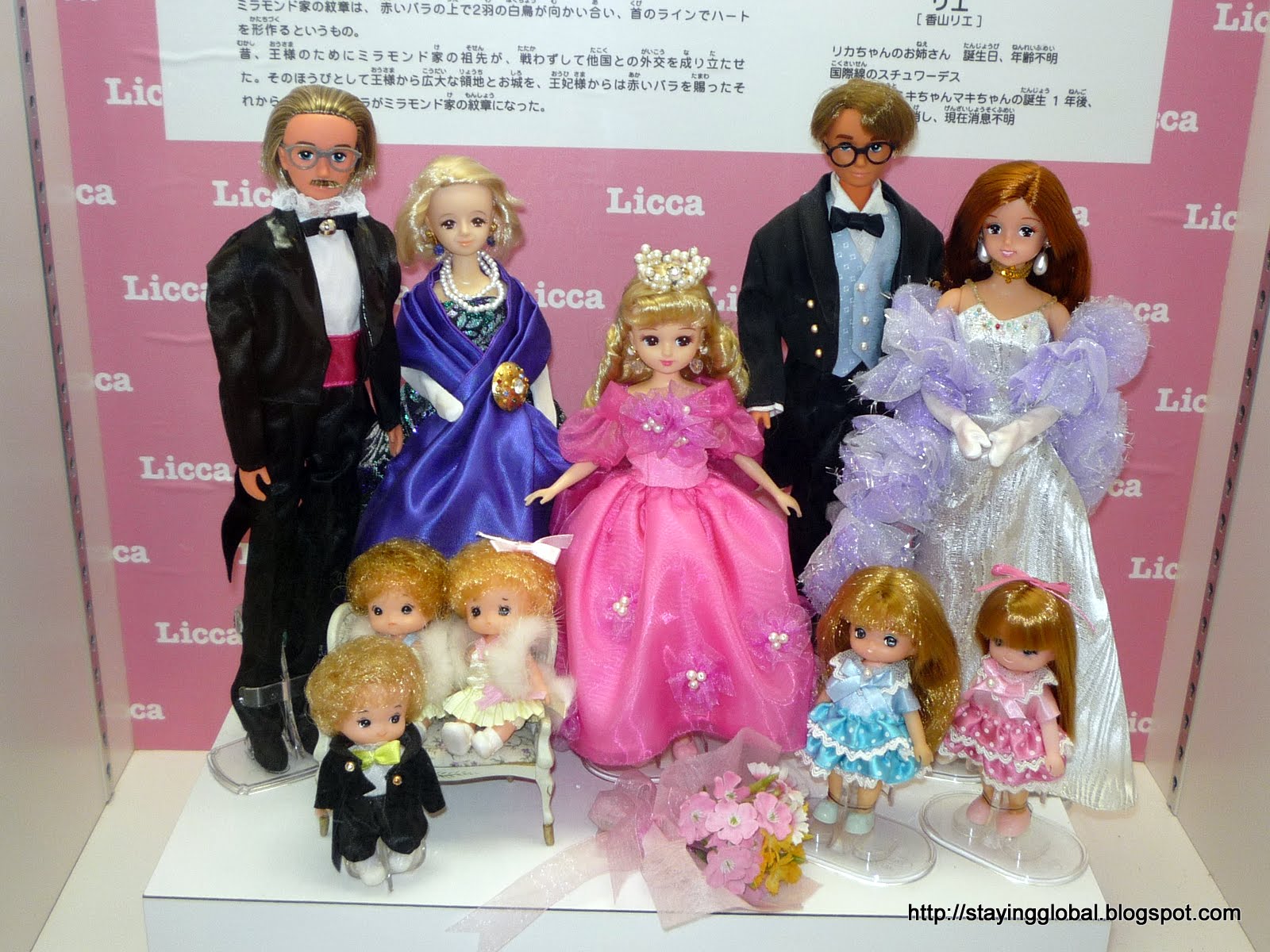
Licca Chan is a doll, or the Japanese version of the globally popular Barbie. 


Licca Chan castle is actually a factory cum museum, where various versions and styles of the doll are on display. 


The lesser known "family members" if Licca chan are also on display.


Young girls get to meet a “live” Licca Chan and pose for pictures with her. Girls can wear satin dresses and gowns like those of Licca Chan and feel like a doll themselves. There is a room with pretty pink furniture – apparently those of Licca Chan’s. There are miniature towns which seem to be a favourite with the little girls visiting the place.


Licca Chan dolls can be purchased with accessories and dresses, in a Do-It-Yourself style store cum activity centre.Licca Chan dolls dressed like young girls from other cultures are also on display and sale.

Visitors can also see Licca Chan production in progress from a viewing balcony.

As cute as it maybe, the place does not have much to offer when compared to Disneyland or San Rio Puroland.    

Opening Hours: 9:00-17:00

Address: 51-3,  Onomachi, Tamura-gun, Fukushima Prefecture 963-3401

Phone: 0247-72-6364

Parking: Available

Website : http://www.liccacastle.co.jp/index.html (Japanese only)

Iwaki City Coal and Fossil Museum

Iwaki City is an erstwhile coal mining city. The Joban Coal mine,the biggest coalfield in entire Honshu, was once Iwaki city's major industry. In the 1950's the town was a booming coal mining centre and continued till its closure in the 1960's when Japan's coal dependency shifted to oil.
The Iwaki city Coal and Fossil museum was set up in August 1984. 


The Joban Coal Mines are recreated here to display the development of the mining industry in Iwaki.
Various stages of coal mining activity are displayed through the various exhibits. 

Visitors can go down a 600 meter shaft by an escalator in the coal mine replica to have a first hand experience. 
Also on display are residential houses of coal mine workers. 


The Fossil Exhibition room has a collection of various fossils found in and around Iwaki. Fossils collected internationally are also on display. 


A long necked dinosaur " Futabasuzukiryu" discovered in 1968 in Iwaki is on display.
Also on display is "Mamenchisaurus", which is said to be the single largest complete dinosaur found in Asia.
"Iwakikujira", the Iwaki whale which supposedly lived about 4 million years ago, was found in 1980 during a construction activity in a local High school. Visitors can learn about the evolution of life from the various exhibits here. 


Opening Hours: 9:00-17:00 hrs ( Closed on third Tuesday of each month) 


Admission : Adults-630 yen, Students-420 yen

Address : 3-1 Mukoda, Yumoto-machi, Joban, Iwaki City, Fukushima 
Phone : 0246-42-3155

Access:   10 minutes from Iwaki-Yumoto IC by car. 


Wednesday, September 14, 2011

Lake Inawashiro


One of our first trips in Japan was to Inawashiro-ko.
Inawashiro ko is the 4th largest lake in Japan and was created as a result of an earlier volcanic eruption of Mt Bandai, assumed to be around thousands of years ago. It is located in almost the centre of Fukushima Prefecture and is the main entrance to the Bandai Asahi National Park.
 The lake’s beaches are popular for bathing and other water sports during summer. 
Pleasure boats shaped like a giant turtle or a giant swan take visitors for a 30 minute cruise around the lake. 

 In winter the lake is almost entirely frozen.  

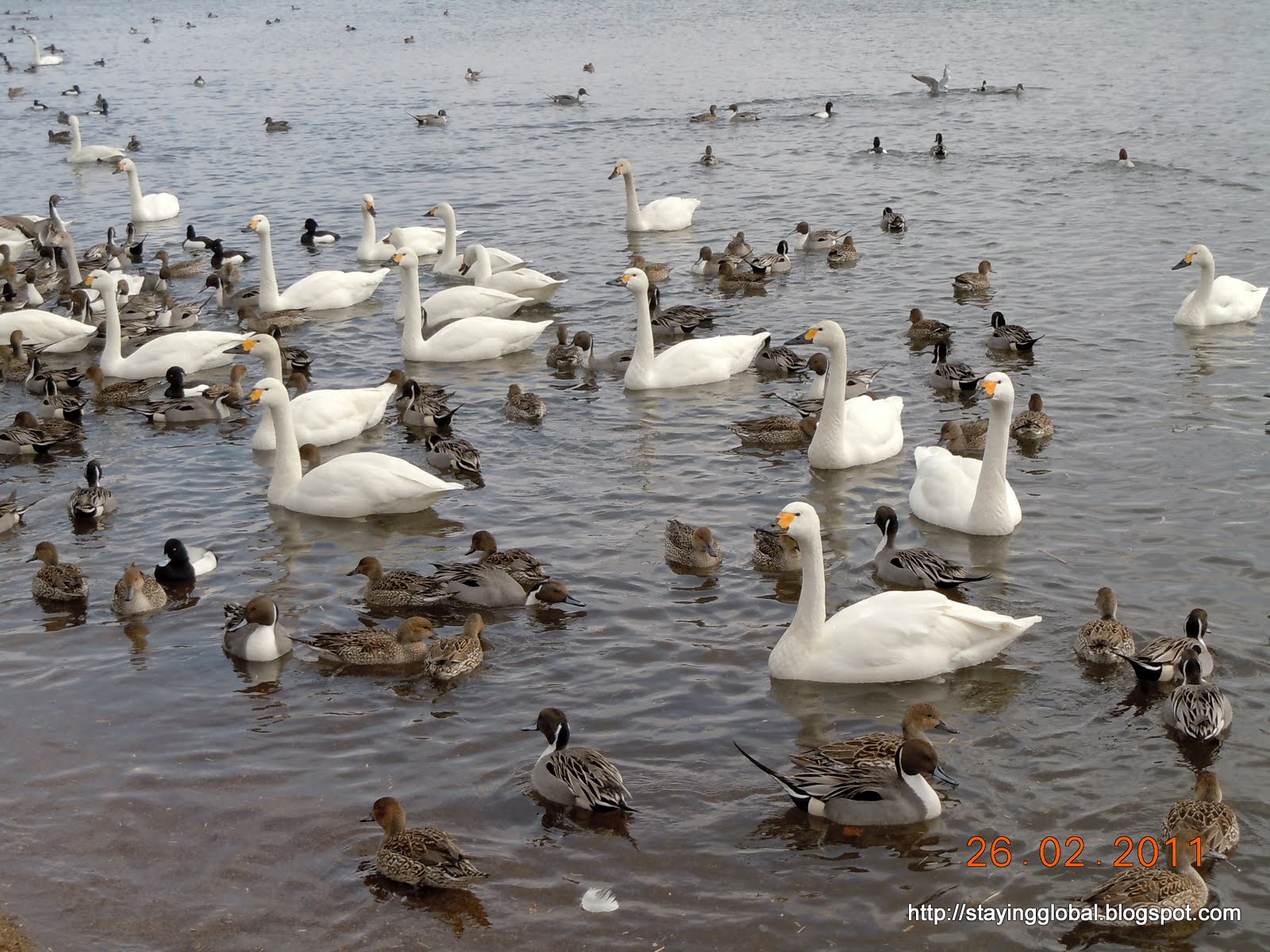
The beaches of lake are filled with migratory swans who come here in winter and remain here till spring.

The area around the parking lot had thick snow walls. The pleasure boats stood still in the frozen lake, perhaps awaiting spring. 

Address: 923-2, Okinazawa, Inawashiro machi, Yama gun, Fukushima Prefecture- 969-3285

Phone : 0242-65-2100 (for the Pleasure Boats)