Kumano Kodo is an ancient network of pilgrimage routes in the Kii peninsula of Japan's Wakayama prefecture. The pilgrimage route also links Kumano area to the other pilgrimage centres of Koyasan, Ise, Yoshino and Omine and travellers have been visiting this area for centuries. The earliest mention about the Kumano pilgrimage can be found in 'Nihon shoki', the earliest book on Japan's history and which was compiled in 720 AD.
Kumano Kodo walking routes link the three important Shinto Shrines - Hongu Taisha, Nachi Taisha and Hayatama Taisha, collectively referred to as Kumano Sanzan. These three shrines enshrine the mountain spirits, a Shinto practice.These three shrines are collectively the head of about 3000 Kumano shrines in Japan. It is believed that visiting the Kumano Sanzan Shrines fees one of past sins and visitors will be bestowed with future happiness and passage to heaven after death. The Kumano Shrines are a good example of the harmonious co-existence of the Buddhism and Shintoism. Shinbutsu Shugo is a belief that Japanese deities are local manifestations of Buddhist figures. With the arrival of Buddhism from China, the prevalent Shinto religion adopted the Buddhist deities as a form of native kami. While each of the Kumano (shinto) shrines had its own distinctive form of nature worship, they also embraced the Buddhist deities and the temples enshrining these deities can be seen near the Kumano Sanzan. The Kumano region is part of the UNESCO World Heritage Site , ' The Sacred Sites and Pilgrimage Routes in the Kii Mountain Range' in 2004. Today, these shrines are far more accessible thanks to road and railway connectivity but some of the ancient walking routes are still in existence.In the old days, a section of the pilgrimage route between the Kumano Hongu Taisha and the Kumano Hayatama Taisha had to be travelled by waterway. This route has been recognised as a UNESCO World Heritage as the only river pilgrimage route in the world.
On our recent camping trip to the Kumano area, we visited the Kumano Sanzan. The first shrine we visited was the Kumano Hongu Taisha.
 The Kumano Hongu Taisha is the oldest of the Kumano Sanzan. Its original location was at Oyunohara on the sand banks at the confluence of the Kumanogawa and Otonashi rivers. All the Kumano Kodo routes lead to this sacred spot. A 33.9 meter tall Torii gate stands at the entrance of Oyunohara. it is said to be the biggest torii gate in the world !
 The Kumano Hongu Taisha was relocated to its current location after the heavy floods of 1889.
A walking trail and stone steps through the tall trees leads to the hilltop shrine.


The shrine's wooden structure is considered to be the oldest type of shrine architecture in Japan.

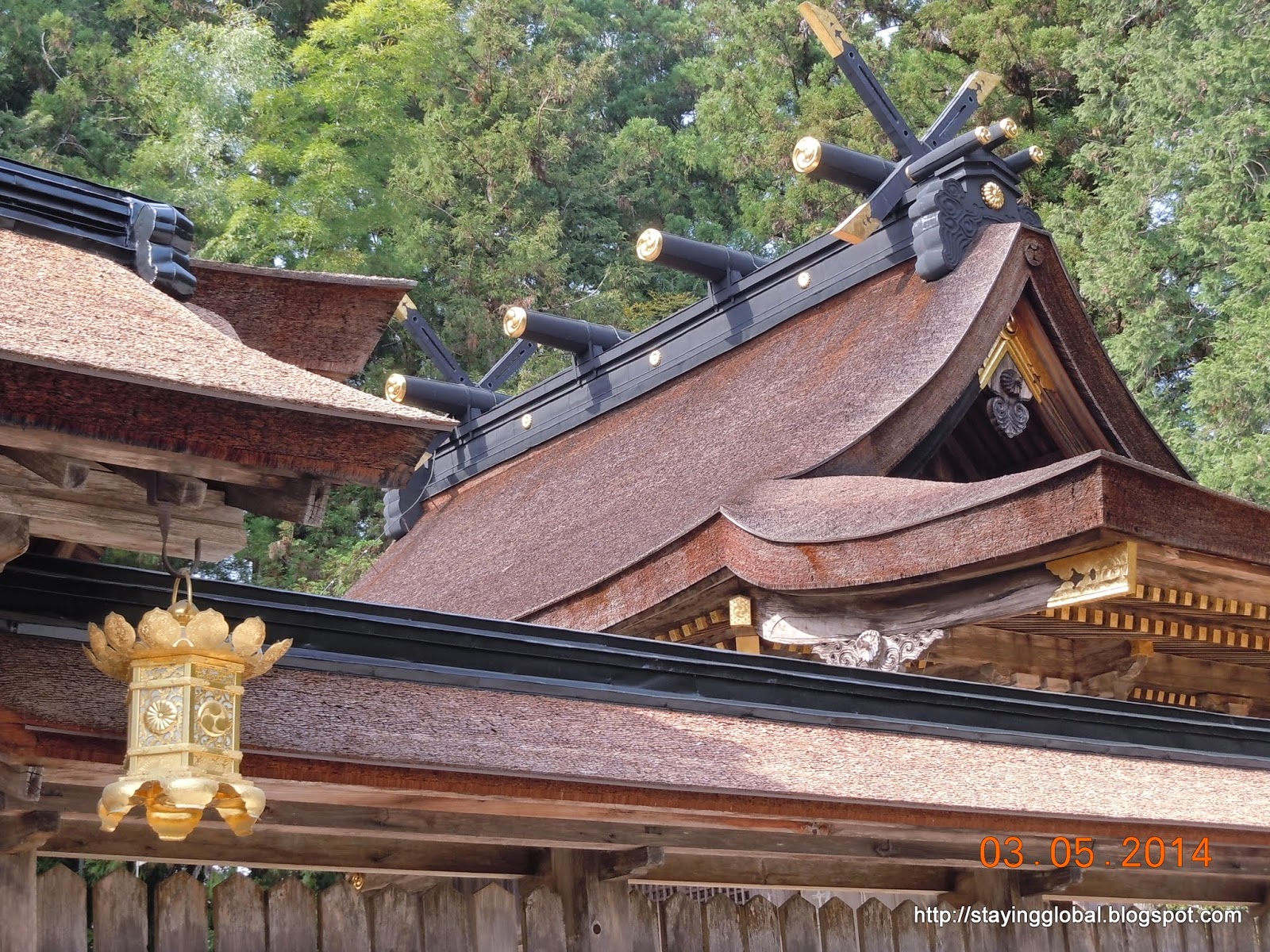


The shrine's buildings enshrine its owns deity, the Kumano Gongen and also the deities of the other two Kumano shrines, Hayatama Taisha and Nachi Taisha along with the sun goddess Amaterasu.
 A legendary creature associated with the Kumano Hongu Taisha is the three legged crow called "Yatagarasu". This sacred crow is regarded as a messenger of the Gods and is a symbol of the Kumano region. It is believed that the Yatagarasu was sent from Heaven to guide Emperor Jimmu on his initial journey from Kumano to Yamato (in present day Nara prefecture).
 Visitors interested in the learning more about the sacred Kumano region should stop at the Kumano Hongu Heritage centre next to the Hongu Taisha mae bus stop.
For a few thousand yen, visitors can dress up in Heian era costumes and get photographs clicked against the backdrop of the shrine.
 This is popular especially among young girls at all three Kumano shrines.
Address: Wakayama Prefecture, Tanabe city, Hongu cho, Hongu -1110
Phone: 0735-42-0009
Hours: 8:00 hrs to 17:00 hrs
Closing days: None
Admission: Free; Treasure Hall - 300 yen
Parking: Free parking lots available at Kinosato behind the Kumano Hongu Heritage Centre.
Kumano Kodo walking routes link the three important Shinto Shrines - Hongu Taisha, Nachi Taisha and Hayatama Taisha, collectively referred to as Kumano Sanzan. These three shrines enshrine the mountain spirits, a Shinto practice.These three shrines are collectively the head of about 3000 Kumano shrines in Japan. It is believed that visiting the Kumano Sanzan Shrines fees one of past sins and visitors will be bestowed with future happiness and passage to heaven after death. The Kumano Shrines are a good example of the harmonious co-existence of the Buddhism and Shintoism. Shinbutsu Shugo is a belief that Japanese deities are local manifestations of Buddhist figures. With the arrival of Buddhism from China, the prevalent Shinto religion adopted the Buddhist deities as a form of native kami. While each of the Kumano (shinto) shrines had its own distinctive form of nature worship, they also embraced the Buddhist deities and the temples enshrining these deities can be seen near the Kumano Sanzan. The Kumano region is part of the UNESCO World Heritage Site , ' The Sacred Sites and Pilgrimage Routes in the Kii Mountain Range' in 2004. Today, these shrines are far more accessible thanks to road and railway connectivity but some of the ancient walking routes are still in existence.In the old days, a section of the pilgrimage route between the Kumano Hongu Taisha and the Kumano Hayatama Taisha had to be travelled by waterway. This route has been recognised as a UNESCO World Heritage as the only river pilgrimage route in the world.
On our recent camping trip to the Kumano area, we visited the Kumano Sanzan. The first shrine we visited was the Kumano Hongu Taisha.
A walking trail and stone steps through the tall trees leads to the hilltop shrine.
The shrine's wooden structure is considered to be the oldest type of shrine architecture in Japan.
For a few thousand yen, visitors can dress up in Heian era costumes and get photographs clicked against the backdrop of the shrine.
Address: Wakayama Prefecture, Tanabe city, Hongu cho, Hongu -1110
Phone: 0735-42-0009
Hours: 8:00 hrs to 17:00 hrs
Closing days: None
Admission: Free; Treasure Hall - 300 yen
Parking: Free parking lots available at Kinosato behind the Kumano Hongu Heritage Centre.


